SEO & AI SEARCH SOFTWARE REVIEW
Semrush review 2026: is it worth the price?
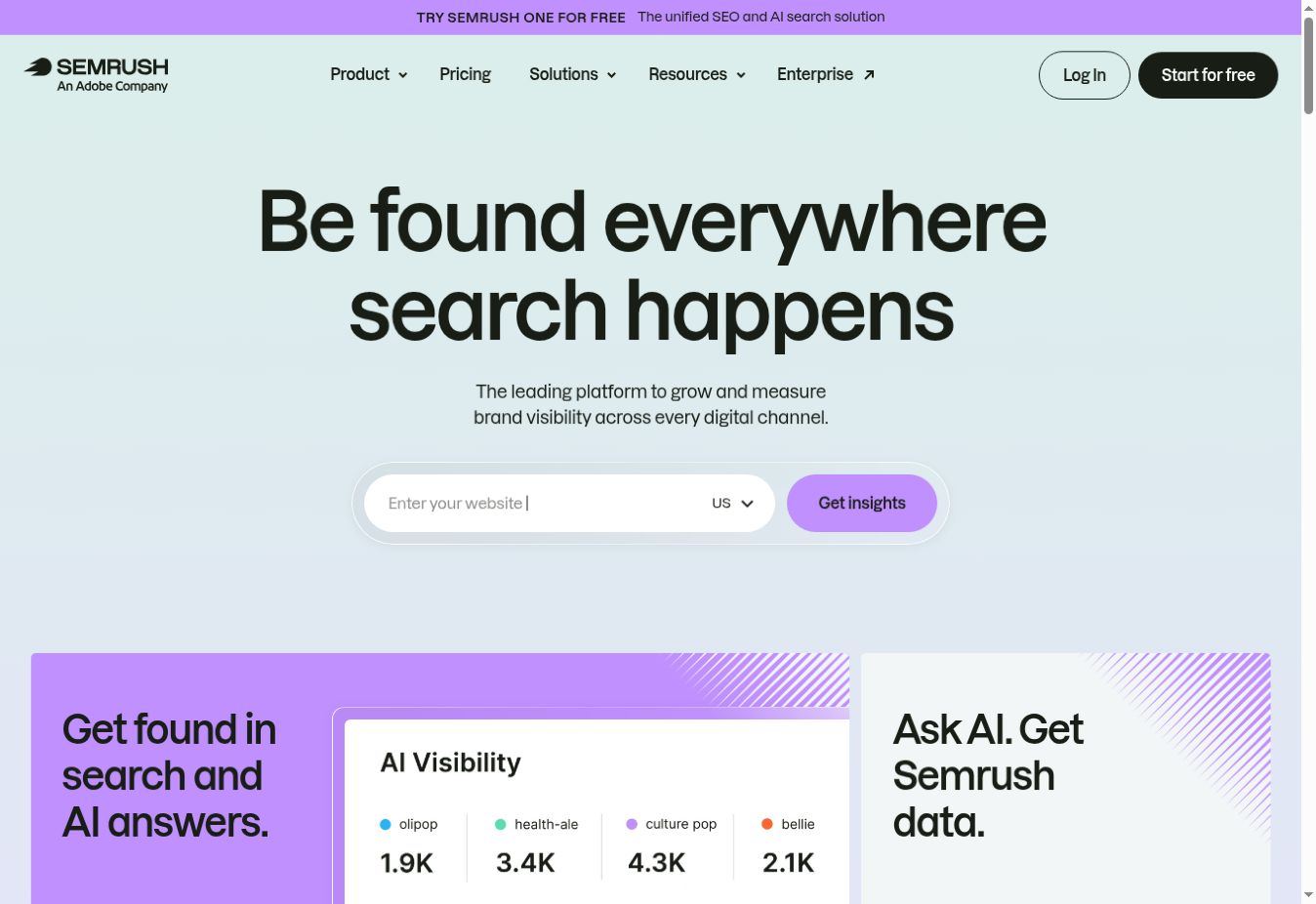
Semrush is a powerful all-in-one visibility platform for keyword research, competitor analysis, technical SEO, rank tracking, backlinks, content, and AI-search monitoring. It can replace several separate tools, but its cost and learning curve only make sense when you have a regular SEO process and will act on the data.
THE SHORT ANSWER
Is Semrush worth it?
Yes, for a business or publisher that researches content, studies competitors, fixes technical problems, tracks rankings, and reports results every month. It is harder to justify for a new site with a small budget and no publishing schedule. The value comes from using several connected tools repeatedly—not from running one occasional keyword search.
Who should use Semrush?
SEO specialists
Research topics, identify search intent, audit sites, monitor rankings, and investigate competitors.
Agencies and teams
Manage several projects, produce reports, and coordinate research across clients or brands.
Content publishers
Build keyword clusters, find content gaps, refresh declining pages, and measure search visibility.
Growing businesses
Connect SEO decisions to a consistent marketing plan rather than treating search as a one-time task.
What does Semrush do?
Semrush brings research, optimization, and tracking tools into one account. Its current platform covers traditional search visibility and newer AI-search workflows. Exact access depends on the plan and add-ons.
- Keyword research with volume, intent, difficulty, trends, and related queries
- Competitor and market research for organic search, paid traffic, and content gaps
- Technical Site Audit for crawlability, links, performance, and markup issues
- Daily rank tracking across selected locations and devices
- Backlink research, link-gap discovery, and monitoring
- AI visibility, prompt research, content tools, and reporting on eligible plans
Keyword research: Semrush’s strongest starting point
Keyword Overview helps you assess a phrase before committing to a page. Keyword Magic Tool expands a seed topic into related terms and questions, while filters help separate informational, commercial, navigational, and transactional intent. The useful outcome is not a giant export: it is a focused group of queries that can be answered by one page without mixing incompatible search intents.
For a new site, prioritize relevant long-tail queries and clear problems over the largest search volumes. Treat keyword difficulty as a comparison signal, not a promise that a page will or will not rank.
Competitor analysis and content gaps
Domain and organic research reports can show which pages and keywords appear to drive a competitor’s visibility. Keyword Gap compares domains to reveal terms that competitors rank for and your site does not. This is valuable for discovering topics, but copying a competitor’s page list is not a strategy. Filter ideas by audience fit, business value, topical authority, and whether you can publish a genuinely more useful answer.
Site Audit: useful, but prioritization matters
Site Audit crawls a website and groups technical findings such as broken links, crawlability problems, missing metadata, duplicate elements, performance concerns, and structured-data issues. A high health score is helpful, but it is not a Google ranking guarantee. Fix problems that block crawling, indexing, usability, or important internal links first; minor notices can wait.
Semrush can identify symptoms, while Google Search Console remains the primary source for how Google crawls and indexes your own site.
Position Tracking and reporting
Position Tracking monitors a chosen keyword set by location and device, making it easier to spot gains, losses, and search-result features. The quality of the report depends on the keyword list: track terms that reflect your real pages, target market, and conversion goals. Avoid treating daily movement as a crisis; review trends over a meaningful period.
Backlink tools
Backlink Analytics helps compare link profiles and find domains linking to competitors. Link Gap can surface possible outreach targets. Because third-party indexes differ, backlink counts will not match every other tool or Google. Focus on relevant, editorially earned links from trustworthy sites rather than chasing a raw link total.
Semrush plans explained
Semrush changed its plan structure and may display local currencies. Prices, limits, trials, and inclusions can change; verify the official pricing page before subscribing.
The real cost: check limits and add-ons
The subscription price is only part of the decision. Compare the number of websites, tracked keywords, reports, users, AI prompts, exports, and crawling capacity you actually need. Extra users and specialist reporting or visibility features may carry additional charges. Annual billing may reduce the effective monthly rate but increases the upfront commitment.
STRENGTHS
What Semrush does well
- Broad SEO workflow in one account
- Strong keyword and competitor discovery
- Useful technical auditing and rank monitoring
- Backlink, reporting, content, and AI-visibility tools
- Enough depth for teams and agencies to grow into
LIMITATIONS
What to consider first
- Expensive for occasional research
- Dense interface and meaningful learning curve
- Important limits vary by plan
- Some capabilities or users may cost extra
- Traffic, keyword, and backlink data remain estimates
How accurate is Semrush?
Semrush is best used for directional intelligence: comparing topics, domains, trends, and opportunities with one consistent dataset. It cannot see every query, click, conversion, or link. Validate decisions with first-party sources such as Google Search Console, Google Analytics, sales data, and customer feedback. When two tools disagree, examine the method and trend rather than assuming one number is absolute truth.
Semrush alternatives
- Ahrefs: a close premium alternative for organic and backlink research.
- SE Ranking: worth comparing when rank tracking and core SEO tools are needed at a lower entry cost.
- Google’s free stack: Search Console, Analytics, Trends, Keyword Planner, and PageSpeed Insights can cover essential first-party monitoring for a new site.
- Specialist tools: a dedicated crawler or rank tracker may be better value when you only need one workflow.
Still building your first site? Our beginner website-builder guide explains the setup choices, while our Hostinger review covers hosting and our Canva review covers visual content creation.
A sensible way to test Semrush
- Define one measurable objective, such as finding ten qualified article ideas or fixing critical crawl errors.
- Create one project and connect only the website you are actively improving.
- Research a focused keyword cluster and compare two or three genuine search competitors.
- Run Site Audit, then fix the highest-impact problems instead of chasing every warning.
- Track a small, relevant keyword set and review whether the insights changed your decisions.
- Upgrade only if the recurring time saved and opportunities found justify the full cost.
COMMON QUESTIONS
Semrush FAQ
Is Semrush good for beginners?
Semrush can help beginners, but its breadth creates a learning curve. Start with one project, run a Site Audit, research a small keyword group, and track only the terms connected to your next pages before exploring the wider platform.
Can I use Semrush for free?
Semrush offers free tools and periodically advertises a limited trial. Free access is useful for testing the workflow, but limits and trial terms can change, so confirm the current conditions on Semrush’s website.
Is Semrush data completely accurate?
No third-party SEO database is exact. Keyword volume, traffic, difficulty, and backlink figures are modeled estimates. Use them for comparison and prioritization, then validate your own performance with Google Search Console and analytics data.
What is Semrush best used for?
It is strongest when keyword research, competitor discovery, technical auditing, rank tracking, backlink analysis, and reporting are part of one recurring SEO process.
Is Semrush worth it for a small business?
It can be, when the business publishes regularly, competes for valuable searches, and acts on the data. A small site that checks a few keywords occasionally may get better value from free Google tools and a lower-cost specialist product.
Which is better: Semrush or Ahrefs?
Both are capable platforms. Semrush is attractive for a broad marketing and visibility workflow, while Ahrefs is often shortlisted for backlink and organic research. Compare the exact limits for the tasks your team performs every week.
FINAL VERDICT
A powerful platform for people who will use it weekly
Semrush earns its place on a professional SEO shortlist because it connects research, auditing, tracking, backlinks, content, and visibility reporting. For Smart Tool Reviews, the deciding question is simple: will the platform guide real work every week? If yes, its breadth can justify the price. If not, begin with free Google tools or a narrower alternative.
Published and reviewed September 14, 2026 · Sources: Semrush’s official features and pricing pages. Product names, limits, trials, and prices can change. Read how Smart Tool Reviews evaluates services.